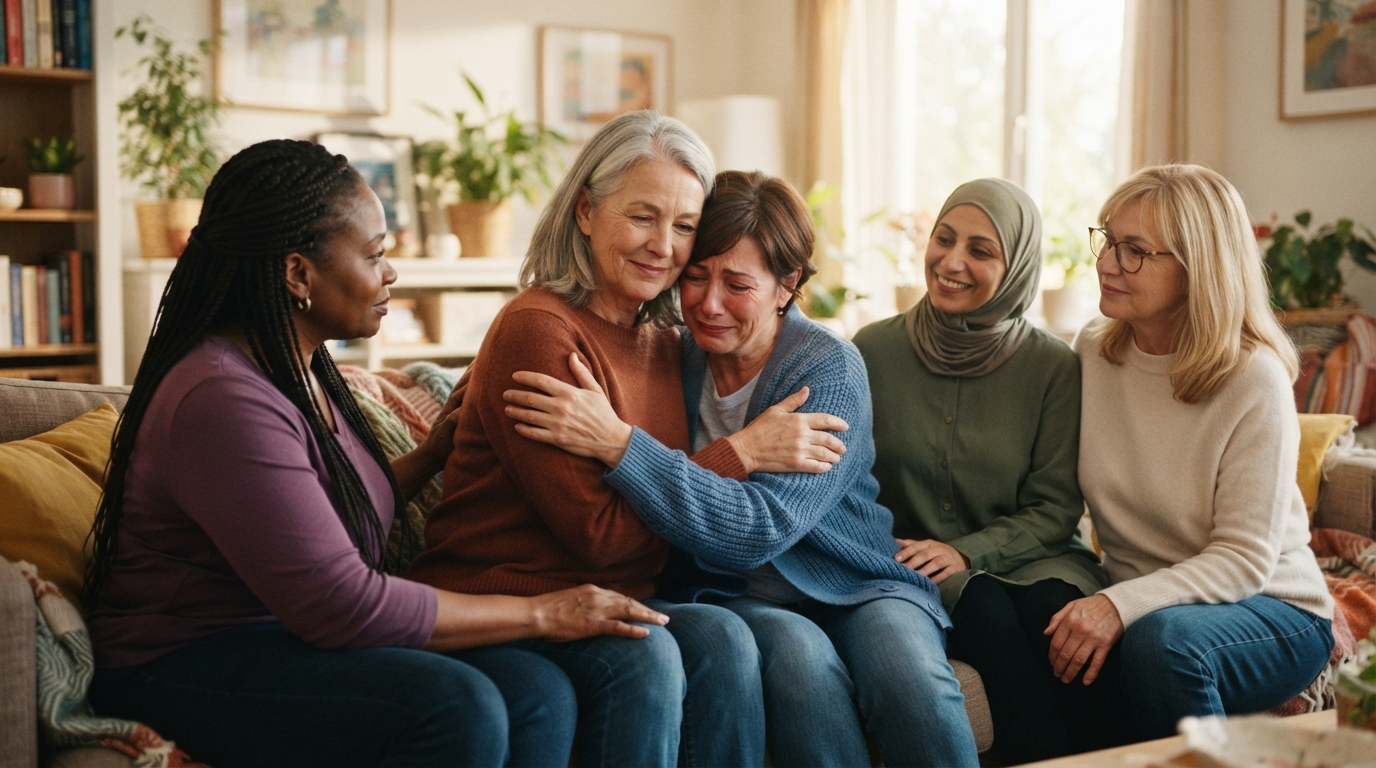
Understanding Life's Transitions
Life in our second half comes with a unique set of transitions. Retirement looms or arrives, reshaping our daily rhythms and sense of identity. Empty nests echo with silence. Health challenges arise. Marriages shift as we navigate new seasons together. Dear friends and family members pass away. The body changes in ways we didn't anticipate. The professional roles that defined us for decades fade into history.
These transitions, while sometimes anticipated, often shake us more deeply than we expect. They're not simple changes—they're profound shifts in how we see ourselves and our place in the world. And unlike the transitions of youth, which often focus on possibility and novelty, the transitions of our later years often involve loss alongside opportunity.
Grief Is Part of Healing
Here's something crucial to understand: grief is part of the healing process. We often think of grief as something that only follows death, but grief is the emotional response to any loss. When you retire, you lose a role and daily structure. When your last child leaves home, you lose a version of yourself as an active parent. When health changes, you lose abilities you took for granted. When you move to a new city, you lose proximity to your community.
These losses deserve to be grieved. Many of us were taught to "move on" quickly or to focus on the bright side. But healing doesn't work that way. Real healing requires acknowledging the loss, feeling the feelings, and allowing ourselves to mourn what we're leaving behind—even as we look forward to what's ahead.
The Stages of Transition
Psychologists have identified common stages people move through during major transitions. While not everyone experiences them in the same order or at the same pace, understanding these stages can help normalize what you're experiencing.
Shock and Denial
Even when we see a transition coming, the reality can be shocking. "I thought I was ready to retire, but now that it's here, I feel lost." Denial protects us by allowing us to adjust gradually. This stage isn't weakness—it's a natural protective mechanism.
Anger and Resistance
As reality sets in, anger often follows. We may feel angry at God, angry at circumstances, angry at ourselves. "This isn't fair." "I didn't deserve this." "Why me?" These feelings are valid. They indicate that something we valued is being taken or changed. Rather than suppressing this anger, we need to acknowledge it and work through it.
Sadness and Grief
This is often when the full weight of loss hits. It's appropriate to feel sad. Cry. Talk about what you're missing. Write about it. The sadness is a sign that something mattered to you. Let yourself feel it fully. This stage, while painful, is often where real healing begins.
Acceptance and Integration
Over time, the intensity of these emotions begins to shift. You don't forget or stop caring about what was lost, but you accept the new reality. You begin to see possibilities in the transition. You integrate the loss into your story without being defined by it.
Practices for Healing
Allow Yourself to Feel
Don't rush this. Don't minimize your feelings or compare your transition to someone else's. Give yourself permission to feel whatever comes—sadness, anger, fear, confusion, even joy. All of these emotions can coexist. You can be grateful for new opportunities while mourning what you've lost.
Talk About Your Experience
Keeping our transitions and losses locked inside often intensifies the pain. Share your experience with trusted friends, family, or a counselor. Sometimes we learn more about our own journey by speaking it aloud. And we often discover that others have had similar experiences, which helps us feel less alone.
Grieve Creatively
Some people journal. Others create art, write poetry, or music. Some plant a garden or plant a tree to honor what was. Some take a pilgrimage or create a memory box. Find a creative way to honor what you've lost. This process helps move the grief through your body and spirit.
Seek Community
Don't isolate during difficult transitions. Connect with others who understand. Join a support group, women's cohort, or faith community. Knowing that others have walked this path and survived—even thrived—gives us hope. In community, we remember that we're not alone in our struggles.
Practice Self-Compassion
Be gentle with yourself during this time. You may feel less productive, less clear-headed, or more emotional than usual. This is normal. Don't judge yourself for struggling. Instead, treat yourself with the kindness you would offer a dear friend going through the same transition. Rest when you need to. Say no to extra obligations. Invest in activities that nourish your soul.
Connect with Your Faith
For women of faith, spiritual practices can be powerful sources of healing. Prayer, Scripture reading, worship, and meditation help center us in God's presence and remind us that we're held by something larger than our circumstances. Our faith doesn't remove the pain, but it provides context and hope—the assurance that God is with us in the transition and has plans for us on the other side.
From Survival to New Life
Healing from major transitions doesn't mean forgetting what was or pretending the loss didn't matter. It means integrating the loss into your story and discovering that life continues—often in richer, deeper ways than before.
Many women find that after moving through a difficult transition, they emerge with:
- Greater resilience and confidence in their ability to handle hardship
- Deeper appreciation for what truly matters
- Stronger relationships with those who stood by them
- A clearer sense of who they are apart from their roles
- New possibilities and unexpected joys they couldn't have imagined before
- A more compassionate heart for others facing transitions
When to Seek Additional Help
While transitions are normal, sometimes we need more support than friends and family can provide. Consider speaking with a therapist or counselor if you experience:
- Prolonged depression or hopelessness that doesn't improve
- Thoughts of harming yourself
- Inability to perform daily activities or self-care
- Isolation that feels impossible to break
- Substance abuse as a coping mechanism
Seeking professional help is a sign of wisdom and strength, not weakness.
Hope for the Future
Life's transitions, even the difficult ones, are not the end of our story. They're chapters—important chapters that shape us and move us toward deeper wholeness. The woman on the other side of a major transition is not less than the woman who entered it. She's often more—more wise, more compassionate, more authentically herself.
As you navigate your own transitions, remember: healing takes time. Be patient with yourself. Trust that the intensity of the pain will ease. Reach out for support. And know that God doesn't waste our suffering. He uses it to shape us, deepen us, and prepare us for the next chapter of our lives.
"The Lord is close to the brokenhearted and saves those who are crushed in spirit." — Psalm 34:18