Why Purpose Matters More Than Ever
As we enter the second half of life, many of us find ourselves at a crossroads. The career ladder we climbed may no longer define us. Children have grown and begun their own journeys. The roles that once occupied our days and shaped our identities have shifted or disappeared altogether. In this transition, a vital question emerges: "What is my purpose now?"
Purpose isn't just something for the young and ambitious. In fact, research shows that people who discover and pursue meaningful purpose in their later years report higher levels of satisfaction, better mental health, and a greater sense of fulfillment. Your second half of life isn't the curtain call—it's the main act.
Redefining Purpose
First, let's redefine what purpose means. In our younger years, we often tied purpose to achievement: climbing the corporate ladder, building a business, raising children, or accomplishing external goals. These are valid pursuits, but they're just one dimension of purpose.
True purpose encompasses:
- Impact: How your life touches and blesses others
- Meaning: What makes you feel alive and engaged
- Legacy: What you want to be remembered for
- Growth: How you continue to develop and learn
- Connection: The relationships and community that sustain you
In your second half of life, you have the unique advantage of wisdom, experience, and perspective. You know what matters and what doesn't. You've learned lessons the hard way. You've survived disappointments and celebrated victories. This is the soil from which deep, authentic purpose grows.
Discovering Your Unique Calling
So how do you discover your purpose? It rarely arrives in a lightning bolt of inspiration. Instead, it emerges through reflection, exploration, and paying attention to the patterns in your life.
Look at Your Gifts and Talents
What are you naturally good at? What comes easily to you? What activities cause you to lose track of time because you're so engaged? These gifts aren't accidental—they're part of who God created you to be. Maybe you're a gifted listener, a natural organizer, a creative thinker, or a compassionate caregiver. Your gifts point toward your purpose.
Consider What Breaks Your Heart
What injustice, need, or problem in the world moves you deeply? What makes you angry enough to act? What causes you to cry? Often, our deepest purpose is connected to what breaks our hearts. If you're moved by poverty, perhaps your purpose involves service. If you're passionate about faith, maybe your calling involves ministry. If you care deeply about younger women, consider mentoring.
Reflect on Your Life Story
Look back at your journey. What challenges have you overcome? What wisdom have you gained? What unique combination of experiences have shaped you? Often, our purpose is connected to our story. The woman who overcame grief becomes a grief counselor. The woman who navigated a career change becomes a life coach. The woman who struggled with faith becomes a spiritual director.
Explore What Brings You Joy
Purpose doesn't have to be serious or heavy. What activities bring you genuine joy? What makes you feel most fully alive? Whether it's mentoring young women, creating art, gardening, traveling, learning new things, or serving in your community, these joyful pursuits often point toward your calling.
Practical Steps Forward
Take Time for Reflection
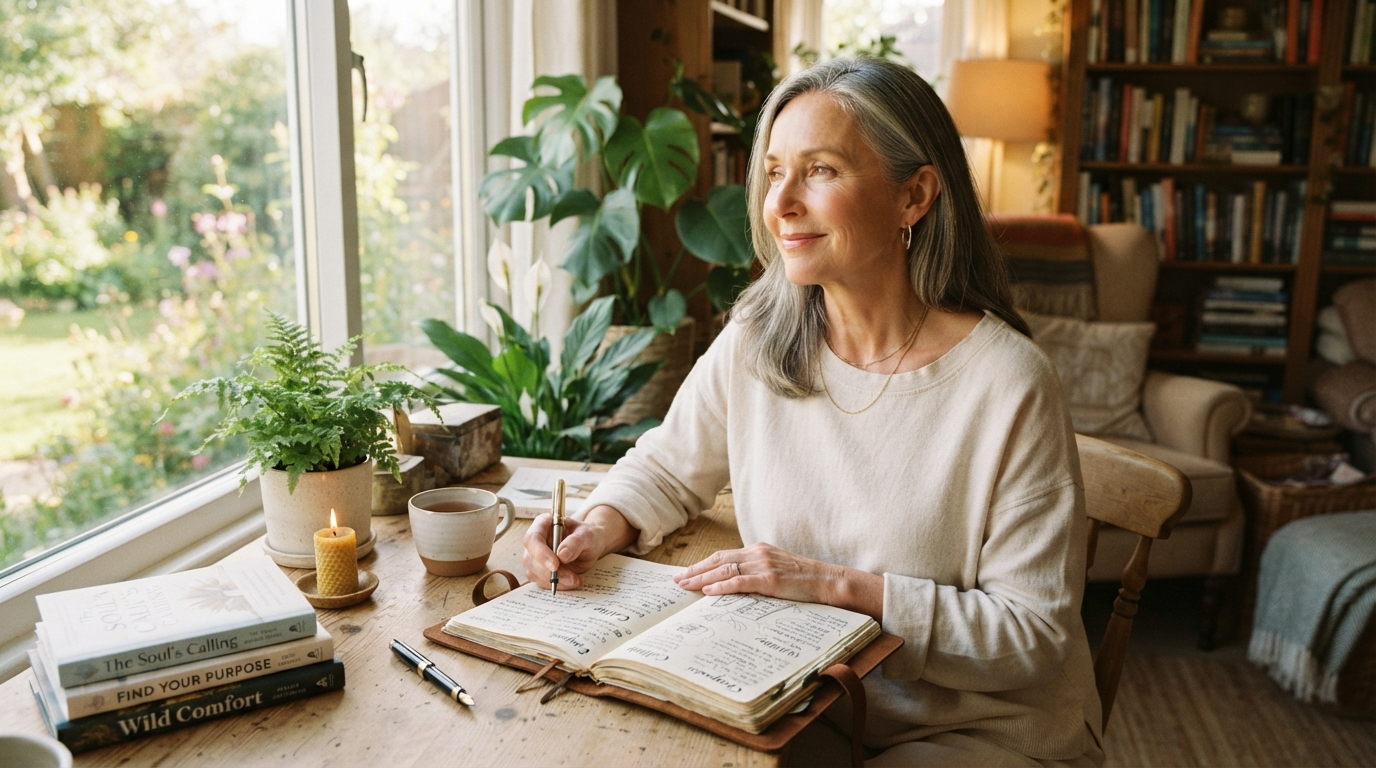
Set aside time to journal about these questions. There's something powerful about putting pen to paper. Write without censoring yourself. What keeps coming up? What themes appear again and again?
Experiment and Explore
You don't have to commit to your life's work on day one. Try volunteering with different organizations. Explore new classes or skills. Talk to women who are doing meaningful work that interests you. Gather information. Give yourself permission to try things and discover what resonates.
Seek Wisdom and Community
Don't journey alone. Talk to trusted friends, mentors, or counselors about your reflections. Consider joining a women's group like Kingdom Aligned Woman Cohorts where you can explore these questions with other women navigating similar transitions. Sometimes others see gifts in us that we haven't recognized in ourselves.
Start Small and Build
You don't need to revolutionize your life overnight. Start with one small step. Mentor one young woman. Volunteer one afternoon a week. Take one class you've been thinking about. Begin one creative project. These small starts often grow into something deeper and more meaningful.
A Kingdom Perspective
As women of faith, we understand that our purpose extends beyond ourselves. We're called to be kingdom women—living out God's values and advancing His kingdom in tangible ways. This might look like:
- Sharing your faith and the hope of Christ with others
- Using your gifts to serve the vulnerable and marginalized
- Mentoring younger women in faith and wisdom
- Praying for your family, community, and world
- Living with integrity and modeling faith to those around you
Your second half of life is not diminished or less valuable than your first. In many ways, it's when you're best equipped to fulfill your kingdom calling. You have freedom, wisdom, and perspective. You know what truly matters. You've learned to trust God through difficulty.
Moving Forward with Confidence
Finding purpose in your second half of life is not a luxury or self-indulgence. It's essential to living fully and making the most of this season. God didn't put us on Earth to coast in our later years. He has plans and purposes for us right now.
As you embark on this exploration, remember: Your purpose may look different from anyone else's, and that's beautiful. Your calling is uniquely yours. Trust your instincts. Pay attention to what resonates. Take small steps. Seek community. And know that God is guiding you toward a life of meaning, impact, and deep fulfillment.
The second half of your life isn't about winding down. It's about stepping fully into everything God created you to be and do. Your best days may be ahead of you.
"For we are God's handiwork, created in Christ Jesus to do good works, which God prepared in advance for us to do." — Ephesians 2:10